


MTC Money Moves Alameda Street Improvement Project to Completion
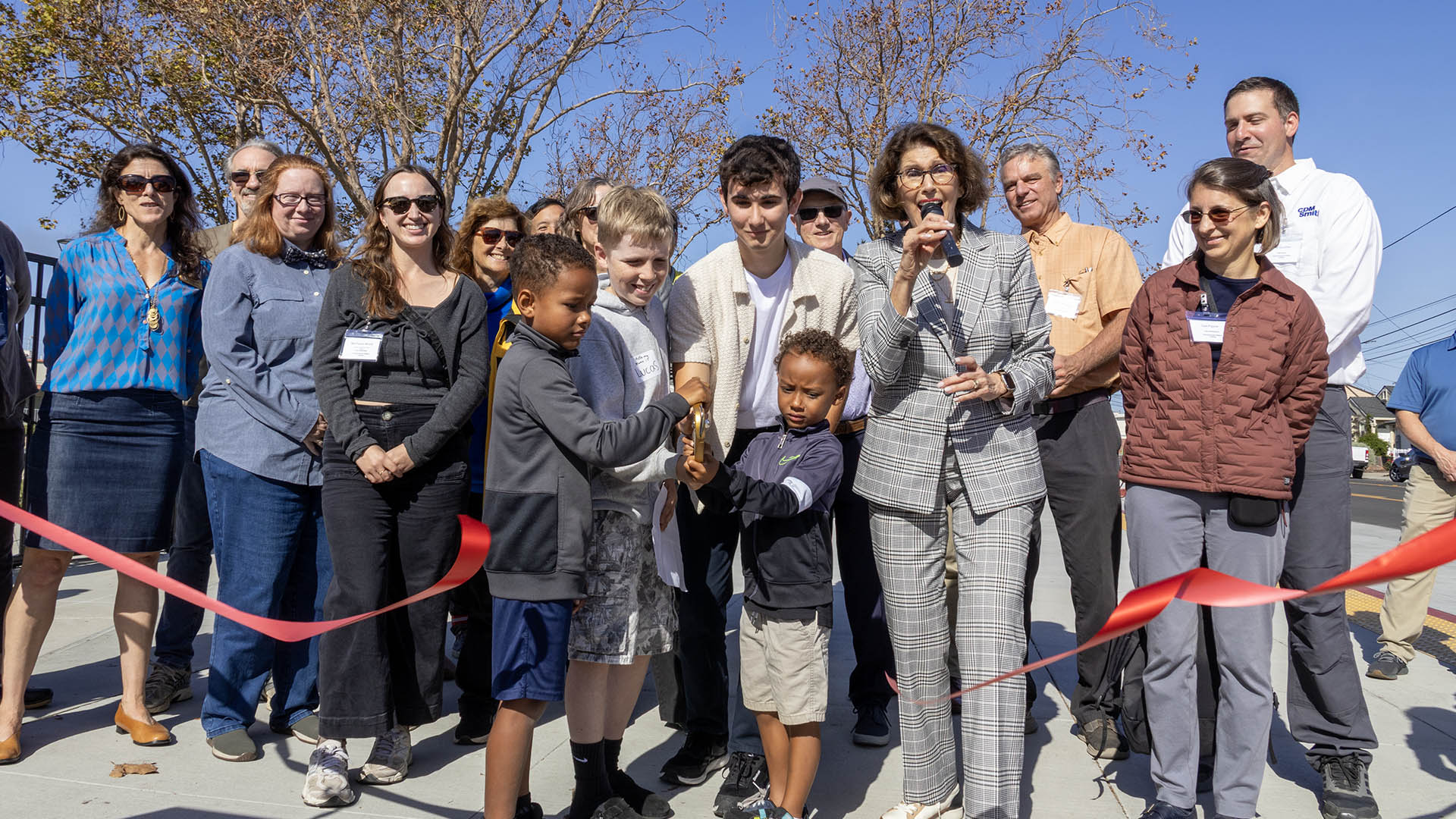
MTC Commissioner and Alameda Mayor Marilyn Ezzy Ashcraft, Alameda Unified School District superintendent Pasquale Scuderi and students from Alameda public schools today cut the ribbon at an event to celebrate major road safety and transit efficiency improvements on Central Avenue in Alameda.
Commissioner Ezzy Ashcraft began the program by stating, “This project represents an important investment in the safety, accessibility and livability of our communities. Today, we celebrate a project that brings us one step closer to achieving our Vision Zero goal.” This work is especially important in Alameda, where 40% of schoolchildren travel to school without an automobile; they walk, bike, scoot or take AC Transit.
The $16.8 million project features roundabouts and a road diet, a two-way bicycle lane and a new transit boarding island at Washington Park, among other changes. These street improvements aim to make it safer to cycle on Alameda Island and to improve efficiency for buses and their passengers.
Project managers solicited input from the disability community about the design of the roundabouts, to ensure that blind and low-vision people can navigate the intersections safely. Braille maps were developed and are available through the Alameda Free Library.
MTC administered $13.1 million in funds for the project, including $7.3 million in state funds through the Commission’s Active Transportation Program and $5.8 million in Federal Highway Administration money through the One Bay Area Grant (OBAG) program.
The Alameda County Transportation Commission, the City of Alameda and the US EPA San Francisco Bay Water Quality Improvement Fund also contributed to the project.
“The funding plan demonstrates strong collaboration between the City of Alameda and MTC, which helps deliver real benefits not just for Alameda residents, but for the region as a whole,” stated Commissioner Ezzy Ashcraft at the event.
The newly redesigned Central Avenue can serve as a Bay Area model for future street design that prioritizes transit efficiency and safety for bicycles and pedestrians. The MTC-led Bay Area Vision Zero Working Group brings together staff from cities, counties and transit agencies – alongside experts from universities – to share knowledge about making streets safer for all.
Submit your comment
In order to receive a reply to your comment, please provide an email address.